
Introduction
Preaching is pastoring, and for the typical Pastor, it is the most time he will get with his congregation. Likewise, for the typical congregant, when all the minutes are added up, preaching it is the most pastoring they will receive. So, it is vitally important that we preach from the perspective of a Pastor, and ditch the current movement to preach from the perspective of a commentator or an aloof mentor.
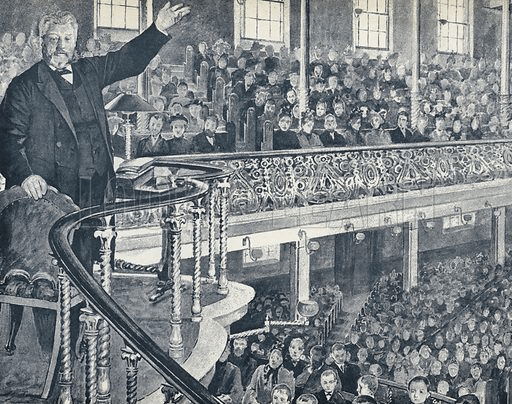
In Pastoral Preaching, voice is everything. It was said of Charles Spurgeon, the Prince of Preachers, that his voice, which carried so famously, had an “indefinable character that made the hearer feel the preacher had singled him out and was speaking only to him” (Spurgeon, 64). Spurgeon had the ability to take command of a room, and yet the tender voice of one calling another to trust Christ was not missed. The way he preached showed love, intimate knowledge, and personal commitment that the Pastoral Preacher must be devoted to.
The Voice of a Pastoral Preacher: The Shepherd’s Crook
A Pastor must preach the Word unashamedly, and without failing to call those in sin to trust Christ and repent. That in and of itself is love. To do that is to love your people enough to address their sin, and to love them in a way that addresses it with the kind of prod in the right direction a shepherd has for the flock. The shepherd’s crook had one end for gently grabbing the neck of the sheep and guiding them in the right direction, and another end to fend off wolves.
Dear Pastor, do not get those two confused. Your crook is to guide your people, whom you know and love (more on this below), and to save your harsh words for the wolves. The voice of too many preachers today is that of harsh rebuke for their people. The voice of too many preachers is that of vague rebuke which incidentally allows the sheep to wander off because their Pastor never spoke “directly to them” as Spurgeon’s hearers felt.
The Voice of a Pastoral Preacher: Personal Shepherd
A shepherd knew his flock. This is the kind of knowledge that Christ plays off of in John 10 when He called Himself the “Good Shepherd.” Jesus described a good shepherd as one who knows the sheep, and the sheep know Him. The sheep know the shepherd, and the shepherd knows the sheep, so well that they “know my voice.” In the ancient world, a shepherd who had cared for his sheep so well could open the door of a pen of sheep from different flocks, and call for his sheep, and they knew his voice as opposed to another. They would come to the door at the sound of their shepherd’s voice, because he knew them, and they knew him.
This is the kind of voice we preachers need to have. We need to have the kind of intimate knowledge of our sheep so that we speak to their needs. We need to know the culture surrounding the body. We need to know the make-up and dynamics of the body. We need to know the sin struggles of the body. We need to know the potential sin struggles of the body. We need to know the flock before us, so that we might preach directly to them. How can the flock know the preacher’s voice if the preacher does not intimately know the flock?
A Pastoral Preacher must have the voice of a shepherd who intimately knows his sheep, and speak to them out of that knowledge. Many preachers know the needs of their people, but don’t address them. More likely, many preachers do not know their people well enough to preach to them. Good Pastoral Preachers are known for preaching to their people, and their people feel spoken to. Good Pastoral Preachers will not just provide commentary on the scripture or culture, but will, like a shepherd, speak to his flock with personal knowledge and love.
The Voice of a Pastoral Preacher: Inward Preaching
A Pastoral Preacher will preach inwardly. By that I mean this, a Pastoral Preacher must first interpret the text and then apply it to himself specifically before he can attempt to apply it to the flock. As R. C. Sproul famously said, every Bible text has “one” interpretation, but endless “application.” A preacher must determine what the text says, its interpretation, and then he must take that and apply it to himself.
Take for example a verse on time management. Ephesians 5:16 comes to mind. A preacher must determine that verse to be talking about time management, which it is, and then a Pastoral Preacher will first preach to himself. A Pastoral Preacher must first search his own heart and preach to the hardened areas of his own heart before his is ready to preach to others. Or as Spurgeon said, “if you cannot catechize your own heart, and drill a truth into your own soul, you do not know how to teach other people.”
Perhaps many preachers do not know how to specifically preach to their people because they never specifically preach to themselves. They never take that text on time management and let it rebuke their TV use, their devotion to sports, or their lack of time with their family. The list of specifics is endless, and yet preachers who fail to do this to themselves will fail to do this for the body. A Pastoral Preacher begins with his own heart, applies the text there, and only then can he lovingly and specifically apply it to his flock.
The Voice of a Pastoral Preacher: Led by the Spirit
We have established that a preacher must preach specifically to his people. He therefore must know them, and then do so with love and care, but we have not addressed the how. Surely a preacher, unless his church membership roll is less than 25, can never address every single need he knows exists among the flock every single week. This is where we must get practical and spiritual.
Practically speaking, it is not hard to apply the text to specific groups of people in your congregation. Beyond simply saying, “hey college students time management is important for you too,” get specific with that group of people. How do college students need to management their time? Simply going beyond calling out to a group of people, asking them to pay attention, and rather specifically speaking to them as their Pastor will provide the preacher a chance to pastorally preach. Saying something like – “college students, maybe you’re like I was in college and you neglect your school work because of social life, or maybe you need to prioritize your time with the Lord and management your school work around that” – will allow you to preach pastorally to that group and give them some meat to chew on.
But this is where we need the Spirit. This is where we stop thinking pragmatically and start praying. This is where we ask for direction as to who to speak to, what to say, and how to say it. This is where we trust the Spirit in our preparation, and we trust Him in the moment. The Spirit can and will help apply the text to those who need to hear it. He will lead you to speak to specific ages or life stage groups one week, and not the next. Pastoral Preaching is done in prayer for the Spirit to help us well before we step into the pulpit, and to open our ears once behind that prayer desk.
The Voice of a Pastoral Preacher: Beyond Commentary or Aloof Mentorship
There is, and probably always has existed, a trend toward distant preaching. Maybe its church size, maybe its desiring not to step too hard on anyone’s toes, maybe its the aloofness of many Pastors – but through whatever combination of reasons preaching has become impersonal. Preaching has become distant. Often I hear preachers who are providing nothing more than a brief commentary on their Bible text or providing a kind of distant and impersonal mentorship.
Preachers appear to be becoming commentators and aloof mentors, but I want to see preachers become Pastors. Spurgeon had a meeting with every single person who would become members of his church. And with attendance of some 6000 he still remembered most if not all the members by name. Spurgeon took practical steps to know his people, and then when he stepped into the pulpit he was not afraid to preach to them like he knew them. Your rebuke and encouragement will go much farther if you get personal with your people. Love your people, know who your people are, and speak to them like you know who they are.
The Voice of a Pastoral Preacher: Heard and Known
We now take the principle of preaching to an intimately known flock and now apply that to the listener. Most listeners may have probably stopped reading by now, but hopefully not. The listener is called to hear the voice of the shepherd. Your Pastor is preaching not so that you simply learn things about the Bible, nor to patronize him, but because he loves you, cares for you, and wants you to respond in faith to the text.
It is the responsibility of the listener to listen, and go beyond the preaching. If the preacher spoke directly to you, as Spurgeon’s hearers so often felt, take that and respond in faith. If your Pastor hit the proverbial nail on the time management head, then you ought to live that out. But if he didn’t, and if the Spirit led him to preach to others specifically and not so much yourself, take the point of his sermon, and get specific to your life. If he spoke to dads about time management and not sacrificing their family, but you find yourself to be a single woman with no kids, there is still application for you. The reason he spoke to those dads that way is because it is true, so how might you be mismanaging your time? What are you sacrificing in the way many dads sacrifice their home life?
Dear church member, you are called to know the voice of your shepherd, and listen to it. You are called to hear God’s Word preached and let it work in your heart. Let the Spirit use the preaching to refine you, and lead you in the right direction.
Conclusion
Preachers are not called to simply provide commentary on a Bible text. Neither are preachers called to simply give their interpretation of the “goings-on.” Preachers are called to Pastor their flock while they are in the pulpit, and we ought to take that seriously. This will be most time you will ever have your typical church member’s undivided attention, take that time to shepherd them away. Take that time to guide them away from the edges of cliffs, and call them out of their stubbornness. Take that time to speak to them out of your love and knowledge of them. And church member, take that time to be shaped by the Good Shepherd who is working through your Pastor.
 jalanpatrick.com