
Introduction
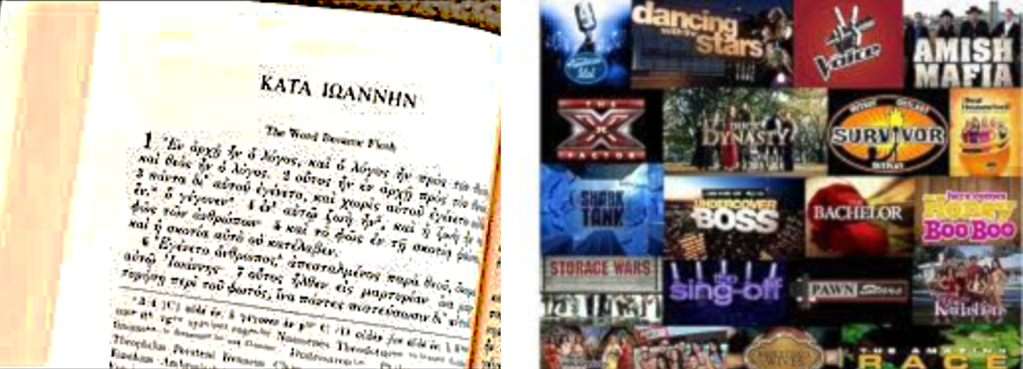
The guilty pleasure of many proves a useful illustration of the intent behind the authors of such books as Matthew, Mark, Luke, and John. Maybe you’ve heard of them! Reality TV show such as The Voice, Top Model, Kitchen Nightmares, and so on are filmed and then edited down. Shows like The Voice or Top Model take a week’s worth of activities and boil it down to a 45-minute episode. The producers decide to only leave in what is pertinent to that week’s drama, or match-up. Typically, the ones at the center of a given episode will be on the “chopping-block” by episode’s end. The men behind the pen of the Gospels and all of narrative books of the Bible purposefully chose to write their books in a similar way.
Bible Narrative as Reality TV
The Gospels, the books of Moses, 1&2 Samuel, and all of which makes up around 80% of the Bible were written for us in the vein of reality television. Moses, Matthew, Joshua, and the Chronicler boiled their narratives down to the details they felt were necessary to know God and understand His story. Or as John put it, “30 Now Jesus did many other signs in the presence of the disciples, which are not written in this book; 31 but these are written so that you may believe that Jesus is the Christ, the Son of God, and that by believing you may have life in his name” (John 20:30-31). John wrote what he felt was necessary in order to believe and have life in the name of Jesus.
The authors of the Bible do not intend to provide an exhaustive history, nor do they intend to provide a perfect chronological history of the world. Each author is painting a picture, not taking a snapshot. By this, they record what happened accurately, but they willingly chose to edit the history into the 30 or so chapters. Moses wraps up the important details of Abraham’s life in about 13 chapters of scripture. This is because not every event in Abraham’s life needs to be recorded for the purpose of the book of Genesis. This is why John can admit that plenty of what Jesus did is not even recorded in His gospel. He recorded what He needed in order to prove that Jesus is the Christ, and life is in His name. The purpose of each author informs his editing, as this is the way God intended it.
The Purposes of Scripture’s Authors
As we have seen above, John gave us the purpose statement for his gospel plainly. Each narrative book of the bible has its own purpose, though not all as obvious as the beloved disciple. Moses wrote to a people who had just left slavery in Egypt, and were soon to enter the promised land. Viewing Genesis through this lens gives the reader more insight into the details Moses chose to include and those he does not write at length about. 1&2 Samuel are meant to show God’s faithfulness to His people through their King and the promise of a Messiah. This theme is continued by the author of 1&2 Kings.
The purpose behind a book of scripture must be taken into account when one seeks to judge what is in that book. This answers the question of why one gospel writer will include a story another does not. It’s not that his history is incorrect, or the others’ is incorrect, but rather that he intended to communicate something with what he included. This is the case for all of the narrative books of scripture.
The purpose(s) that drove each author of scripture help to clue us in on why they edited their particular works down to the studio allotted 45 minutes. Like the producers of your favorite reality TV show, the authors of scripture took all that had happened in their particular setting and included what fit their purposes. The Bible may feel like such a small story, considering it centers around just a few people at any given moment. When you tune into your favorite reality show and realize this week’s episode did not focus on a particular star, you realize the producers chose to focus on certain characters who were at the center of that week’s story. This is the situation for the scripture writers, and it allows us to better understand the Bible when we take this into account.
Occasional Documents and Reality TV
Each narrative book of the bible is not simply a cold history, they are books written for specific people to relay specific details of history. The authors of scripture gather all of the history and information on their subject, and then boil it down to their purpose. This is why I assert that the narrative books of the Bible are occasional documents. They were written for specific occasions – times, places, and people. This is the case for Paul’s letters. Like an email, Paul wrote to specific people for specific reasons. But I believe when we look at the narrative books of the bible in this lens we better understand their glory and their connection to our favorite Reality TV. We will better understand what the author wrote when we better understand why he chose to write.
Inspiration as Reality TV
The Holy Spirit so chose to write the scripture through men. He chose to use their personalities and purposes to capture God’s truth. Scripture may bear similar qualities to Reality TV, but that point is not worth noticing if the glory of God’s story is not better understood. My point is not to simply make you go, “huh, wouldn’t ya know it!,” but rather to allow you to see the glory of your bible. Your bible was inspired by God, or Paul said, “breathed out” by God.
That inspiration of scripture does not begin and end simply at the words written, but also at the words not written. The Holy Spirit so chose to use men who would boil history down into their purposes, so as to give us a Bible that is not simply a snapshot of history, but a painting communicating a message. This should help to inspire your love for the scriptures. God chose to give us His Word, His perfect Word, in only the way He could have known and understood.
Conclusion
Your Bible is similar to your favorite Reality TV shows, which should only make us love and cherish it even more. The Bible is no lifeless document, and the history it contains shows God’s love for His people. What the authors of scripture chose to include in scripture should show us their purposes. The Holy Spirit chose to inspire scripture similar to how your favorite Reality TV show is made, and that is just another display of God’s love in the inspiration of His Word.
For His Glory,
Alan
 jalanpatrick.com