
Introduction
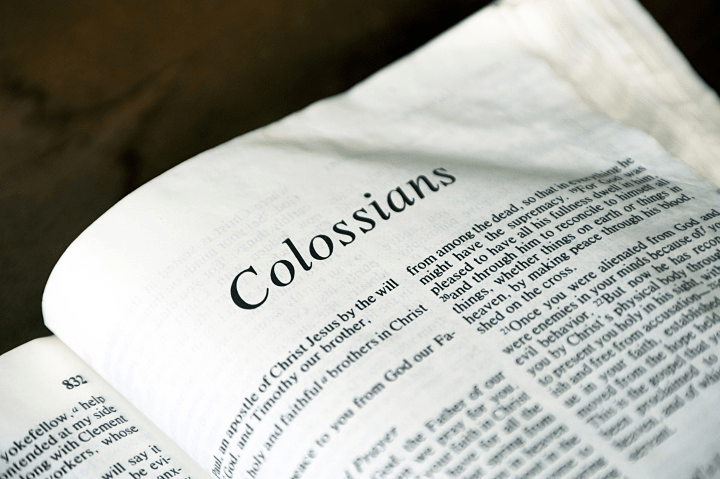
So, you were reading your bible the other day (I hope!) and you came across Colossians 4:16, “and when this letter has been read among you, have it also read in the church of the Laodiceans; and see that you also read the letter from Laodicea” (ESV). Naturally, that verse got you thinking, “so, what about the letter to the Laodiceans?” You’ve just encountered, maybe for the first time, that the Bible itself points to its construction, and therefore it’s inspiration through preservation.
Constructing the Bible
I am tempted to avoid using the word, construction, to refer to the how we got the Bible. That word implies a kind of human originality. What we know of how we got the Bible, yes, even those we hold today in English, is that God used humans to put together the very word He inspired.
As Peter said of scripture, 2 Peter 1:21, “For no prophecy was ever produced by the will of man, but men spoke from God as they were carried along by the Holy Spirit.” What is evident, and was known by Peter, is that the words written on page were the words of God Himself. These words were communicated through the personalities and writing style of men like Moses, David, Paul, Peter, Matthew, John, and so on.
So, we can trust the words of the Bible, but what about other words? After all, there are plenty of other things written and floating around Israel that were not included in the Tanakh. And, as we saw in Colossians 4:16, even the Apostle Paul wrote letters that we don’t have in our New Testament. There are no shortage of writings that can be dated back to the time of Paul, the second and third century, and much more, so the question is, who constructed our Old and New Testaments, and why? How does the construction of the Bible show its the preservation?
Old Testament Construction
The Old Testament you hold in your Bible is the same Old Testament that Jesus, Paul, Peter, and all Jews and Christians held from about 300BC to 300AD (around 300AD is when the first whole bibles, OT+NT, began to circulate). The copy that Jesus and Paul would have studied was called the Greek Septuagint. When New Testament writers quote from the Old Testament, they are quoting from the Greek Septuagint, a translation of the Hebrew Bible.
The Hebrew bible (and it translation, the Septuagint) contained three parts: Torah, Nevi’im, and Ketuvin (or Tanakh). In English, the Law, the Prophets, and the writings. We today have arranged our Old Testaments differently than the Tanakh, and Septuagint. This is for theological reasons and genre reasons. The books are the same, and the Old Testament Jesus had is the Old Testament you have though it may be worth looking into how the Tanakh ordered the 66 books.
The construction of the Old Testament reveals a long-standing preservation of God’s Word. There is much Jewish literature written during Israel’s history leading up to Jesus, and after. But the Jews themselves did not recognize this as Canon, and did not recognize it as scripture. It is not so simple to say that writing that looks like scripture is a book “taken out” or “left out” of the Bible.
God has given us the exact words He wants us to recognize as directly and perfectly from Him. He has not left anything out. Man did not tamper with the Bible, and King James did not have free rein to change the scriptures as your high school history teacher probably told you he did (at least mine did!). He preserved His Word when Moses, Joshua, David, Isaiah, all the way until Malachi closed the Old Testament. He graciously allowed us to have compiled Old Testaments that have not changed since Jesus’ time. God’s preservation of His Old Testament speaks to its inspiration and His heart for His people.
New Testament Construction
The New Testament that you hold in your Bible was formally canonize in the late 4th and early 5th century. The Early Church universally determined those 26 books during the counsels of Hippo and Carthage, though correspondence from Athanasius in AD 367 indicates many were already recognizing those 26 books some 30 years prior. This is where we come to a text like Colossians 4:16 and wonder, why Colossians and not Laodiceans?
We got the 26 books of our New Testament by the preserving hand of God. We have no standing record of Laodiceans. This letter did not stand the test of time. It was lost, destroyed, thrown away, or more simply put: not preserved. God wanted us to have Colossians and not Laodiceans. Probably not because Paul got heretical in Laodiceans. Many books written at the time of the New Testament that looked and felt like they should be books of the bible were left out for that reason, but not this letter to the Laodiceans.
The Early Church who “constructed” the New Testament did so on the basis of 4 criteria: apostolicity, universality, orthodoxy, liturgy. Apostolicity meant that the Early Church chose books that were written by Apostles, or those close witnesses to apostles. So Paul, Peter, and John all make sense, but then the Church chose books written by witnesses such as Mark, Luke, and Matthew. Hebrews is the only exception to the rule, though the Early Church seemed much more united around Pauline Authorship than we are today.
Universality meant that when everyone sat in the room they all agreed on the book as fitting the next two categories. Orthodoxy meant that as they scoured potentially inspired works of God they threw out ones with sketchy theology. So, the apocryphal gospel that depicts boy-Jesus in anger stinking another boy dead, only to raise him back from the dead doesn’t make the cut. Liturgy meant the books they chose were able to be used in worship for teaching, praying, or singing.
It is vitally important to understand our New Testaments were canonized well before our time. Almost 2000 years ago. God is good, and He gave us His word. Perhaps canonization as inspiration would make for its own article, but canonization is just one way God chose to preserve His Word. We could discuss any number of ways God in His inspiration preserved the particular books of the Bible that we have today. Our New Testaments are proof that the preservation of His Word through time reveals God’s love for His people.
Conclusion
No, your Bible is not flawed. The Bible has a rich history that we have merely scratched the surface of. The Bible did not come floating down from Heaven leather bound and in the King James Version. Nor did man tamper with the Word at any point in history. Nor have we by an act of nature, depravity, or misplacement left any books out of our bibles. God preserved the exact books He wanted us to have. His Word is inspired, therefore it has been preserved by Him. Let us continue to be guided by the Word, and let God shape us by His Word, as He has promised to do in His Word.
For His Glory,
Alan
 jalanpatrick.com